






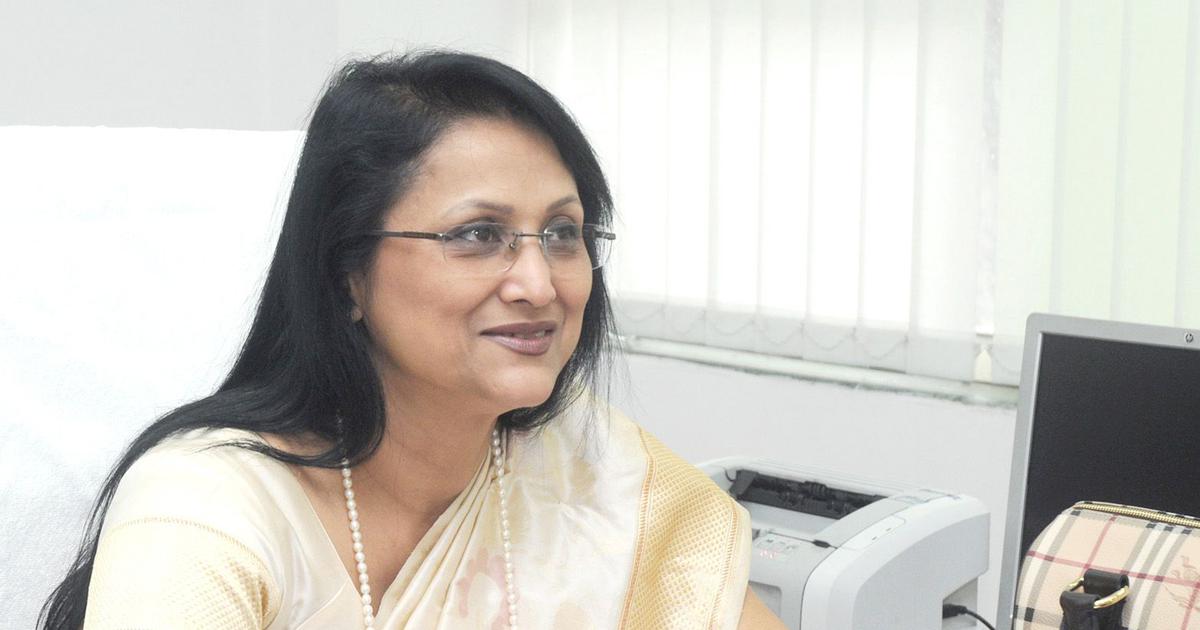
Three days before Ranee Narah turned 47, on October 47, 2012, her then party colleague Himanta Biswa Sarma had tweeted, “Congratulations to Shrimati Rani Narah for her induction into the Union Council of Ministers.”
At 11.56 am that day, Ranee had taken oath as a junior minister in the Ministry of Tribal Affairs in the Manmohan Singh-led UPA government. Sarma’s congratulatory tweet was sent exactly 36 minutes after the ceremony.
To date, Ranee has not responded to the tweet.
Many would have viewed Sarma’s courtesy tweet as an attempt to bury an old hatchet. The series of events that followed over the next 12 years reveals that the hatchet remained exactly where it was, though the stature of these two protagonists in this saga has changed. A former Congress leader, Sarma has since joined the BJP and is now the chief minister of Assam. While his career graph in the current political scenario has been rising, Ranee has all but taken a back seat in the public memory since her exit from the Rajya Sabha in 2022.
Ranee, it seemed for a long time, was destined for bigger things. Born Jahanara Choudhury, she took the name “Ranee Narah” following her marriage. Her husband, Bharat Narah, is a six-time member of the Assam Legislative Assembly and a former Congress minister in the Assam government.
On the political turf, there were at least three veteran Congress leaders who played a pivotal role in her ascent – Hiteswar Saikia, Santosh Mohan Dev and Tarun Gogoi. Ranee’s formal entry into politics happened in the mid-1990s and she would be, in quick succession, appointed as the general secretary, then vice president and finally president of the Assam Pradesh Youth Congress.
About a decade before Ranee’s entry into politics, a young leader from the All-Assam Students’ Union was creating waves in the state. When the Asom Gana Parishad (AGP) formed the government under Prafulla Mahanta, a 27-year-old Bharat Narah from the ethnic Mising group of people was made a minister.
Apparently, it was Hiteswar Saikia who had introduced Ranee – then known by her birth name, Jahanara – to Bharat. The young couple fell in love and their relationship blossomed with the blessings of Saikia. Former student leaders who had taken oath as chief minister and ministers in the new AGP government were among those who attended their wedding. Ranee said that she and Bharat had a nikah ceremony, a court-registered marriage and a celebration in keeping with the Dugla Lanam (elopement marriage) system – a popular form of marriage among the Misings.
Months later, the Mahanta government would run into a storm of dissent over myriad issues. Among them was Bharat’s decision to invite Saikia to his wedding. His then party colleagues were also upset with him for marrying a Muslim woman.
Saikia, who was chief minister of Assam for two terms, died in 1996. By then, the Narah couple were firmly in the Congress fold and have remained steadfast in their loyalty towards the grand old party.
Like the Narahs, Himanta Biswa Sarma also considers himself a protégé of Saikia. Younger than both Bharat and Ranee, Sarma had cut his teeth in student politics while he was still in school and would rise to be number two in the Tarun Gogoi government before leaving the Congress to join the BJP in August 2015.
As an up-and-coming Congress politician in the mid-1990s, Sarma’s proximity to Saikia and his growing clout within the organisation had created a rivalry among several young leaders who had similar ambitions. Then, in 2001, Sarma entered the assembly for the first time as an elected member, taking his first step towards what has been an unbroken run till date. By then, Ranee had already become a two-time MP, winning her first election in 1998 from the Lakhimpur Lok Sabha seat in Upper Assam.
Ranee’s critics say she had “managed” the ticket from the Congress high command despite several complaints against her. “I remember the late Santosh Mohan Dev had introduced her to us at the Circuit House,” recalls a now-retired journalist, who didn’t wish to be named.
Ranee is candid about her loyalty to the Congress high command, especially Sonia Gandhi. “I owe everything to Sonia Gandhi. She liked me and trusted my political acumen. Even Chief Minister Tarun Gogoi would often gently chide me and say he had to accommodate me because of Sonia Gandhi,” Ranee said to the author during a personal interaction.
In 1999, Ranee won from Lakhimpur again – this time defeating the AGP nominee, Sarbananda Sonowal, who would, a decade and a half later, go on to become Assam’s first BJP chief minister in May 2016.
“But, as in cricket, politics sometimes does not work to a game plan,” Ranee says. “The best bowling goes unrewarded and you lose despite scoring a century. But all’s well that ends well.”
After Gogoi became the chief minister for the first time in 2001, he made two appointments, one of which would have far-reaching consequences for him, the Congress and for Ranee. While Ranee’s husband, Bharat, was appointed a cabinet minister, a post he would hold for ten years, Sarma was made the junior minister for planning and development in 2002. Ranee was by then largely preoccupied with cricket administration. But unknown to her, resentment was brewing against her within the party, which ultimately cost her the Lakhimpur Lok Sabha seat.
In 2004, the year the Congress had upset the BJP’s “India Shining” campaign, and Manmohan Singh, a Rajya Sabha MP from Assam, was sworn in as the prime minister, Ranee lost the Lakhimpur seat following a full-blown rebellion from local MLAs against the party’s official nominee. Four MLAs refused to campaign for Ranee. She was also accused of not submitting formal accounts of a session of the Assam Sahitya Sabha held at Lakhimpur in 2003. Ranee was the reception committee president. The amount was reported to be around Rs 50 lakh. The local MLAs were also unhappy with her failure to do anything ‘substantial’ for the constituency.
Her “proximity” to the late Hiteswar Saikia also came back to haunt Ranee, as several of her colleagues in the Assam Congress accused her of “spying” for Saikia when he was the chief minister.
Two years later, in 2006, the feud between her and Sarma was out in the open. “Things have gone a bit too far and since the department and the chief minister have ignored my complaints of kickbacks being demanded for funds meant for development, I have decided to move Madam Sonia Gandhi in the greater interest of the party,” Ranee had declared. “What I am doing is for the party. I am not working against any poll candidate or criticising the government or the party leadership. I am only highlighting corruption in one specific department, and that too, after a former executive of the Mising Autonomous Council (MAC) wrote to the MAC chief about the wheeling-dealing in the department to get funds released.”
Ranee’s announcement that she would seek an audience with the then party chief in New Delhi came a day after Sarma had called for an impartial enquiry into the corruption allegations levelled against him by the former MP. Ranee’s husband, Bharat, however, described Sarma as an asset for the party and what went on within the four walls of the Narah residence never saw the light of day.
But there is a day deeply entrenched in Ranee’s memory. It was a day she cried herself to sleep, resting her head in her mother Nurjahan Choudhury’s lap. She woke up the next morning numb and broken to see both Bharat and Gogoi supporting Himanta, who dismissed her as “mentally disturbed”.
Her little act of rebellion aside, Ranee bagged the ticket for the Lakhimpur Lok Sabha seat in 2009 and, despite the initial reluctance of the local MLAs, she managed to bring them around. This marked a brief spell of all-round resurgence for the former all-rounder. Ranee was made the deputy chief whip and three years later, in 2012, replaced the National Congress Party’s (NCP’s) Agatha Sangma as the Northeast’s only woman representative in the Union cabinet. Her luck, it seemed, turned again, especially after her narrow escape from what could have been a fatal crash. On July 22, 2011, Ranee, accompanied by the then Assam Congress president and Rajya Sabha MP, Bhubaneswar Kalita (who has since moved to the BJP), were on board a Delhi–Guwahati flight which reportedly avoided a mid-air collision over Patna. “It was God’s hand that saved us,” Ranee said after that close brush with death.
Although she lost in the 2014 parliamentary elections, Ranee went on to serve another stint as a parliamentarian in 2016, this time as a Rajya Sabha member. Six years later, her exit from the Rajya Sabha in 2022 would be etched in the record books, as her replacement helped the BJP cross the 100-member mark in the upper house.
But even before her six-year term ended, vexing developments had cast a shadow over her. In September 2020, Ranee was named as the first accused in a case of alleged misappropriation of around Rs 1 crore from funds she was entitled to spend as an MP under the Members of Parliament Local Area Development Scheme. The move followed a complaint filed against Ranee in 2017 after a report submitted by the Comptroller and Auditor General (CAG) of India to the Assam Legislative Assembly’s Public Accounts Committee. The alleged misappropriation, according to the complaint, took place in 2013–14 when Ranee was Lakhimpur MP.
Around a decade after his congratulatory tweet, Sarma, by then the chief minister of Assam, sent another note to Ranee. This one she could not ignore. In September 2023, Ranee appeared before the chief minister’s special vigilance cell.
That was not the only allegation against Ranee. In 2023, once again, Manab Deka, a BJP MLA from the Lakhimpur assembly segment, a part of the Lok Sabha constituency, accused Ranee and Bharat of encroaching upon government land and setting up a tea estate in her name in Lakhimpur. Bharat is the sitting MLA from the Naoboicha assembly segment, which is also part of the Lakhimpur parliamentary constituency.
“Bharat Narah and his wife, Ranee Narah, have set up a tea estate [Ranee Narah Tea Estate] at Balijan, Lakhimpur, after encroaching upon government land and forcefully evicting some landless farmers [who] were staying there after losing their homes to floods. They did this when Bharat Narah was a minister in the past Congress government,” Deka alleged and claimed that the Narah couple had also applied for possession of 128 bighas of land there through a person claiming to be Bharat’s nephew. Ranee and Bharat have both rubbished the allegations, as has the Congress.
Even in matters related to cricket, things haven’t played out the way Ranee would have wanted them to. On November 12, 2016, Sarma, then finance minister in the Sarbananda Sonowal government, was selected as the president of the Assam Cricket Association, while Ranee was replaced as a vice president in a revamp of the state cricket body’s panel of office-bearers. Her proposal to create a quota or reserve the post of vice president for women’s cricket was vehemently opposed by those present.
After the meeting, a smirking Sarma was seen walking out of the Barsapara Cricket Stadium in Guwahati, followed by a crestfallen Ranee. One wonders if a “thank you” response to the 2012 tweet would have made a difference to her life and Assam’s politics.
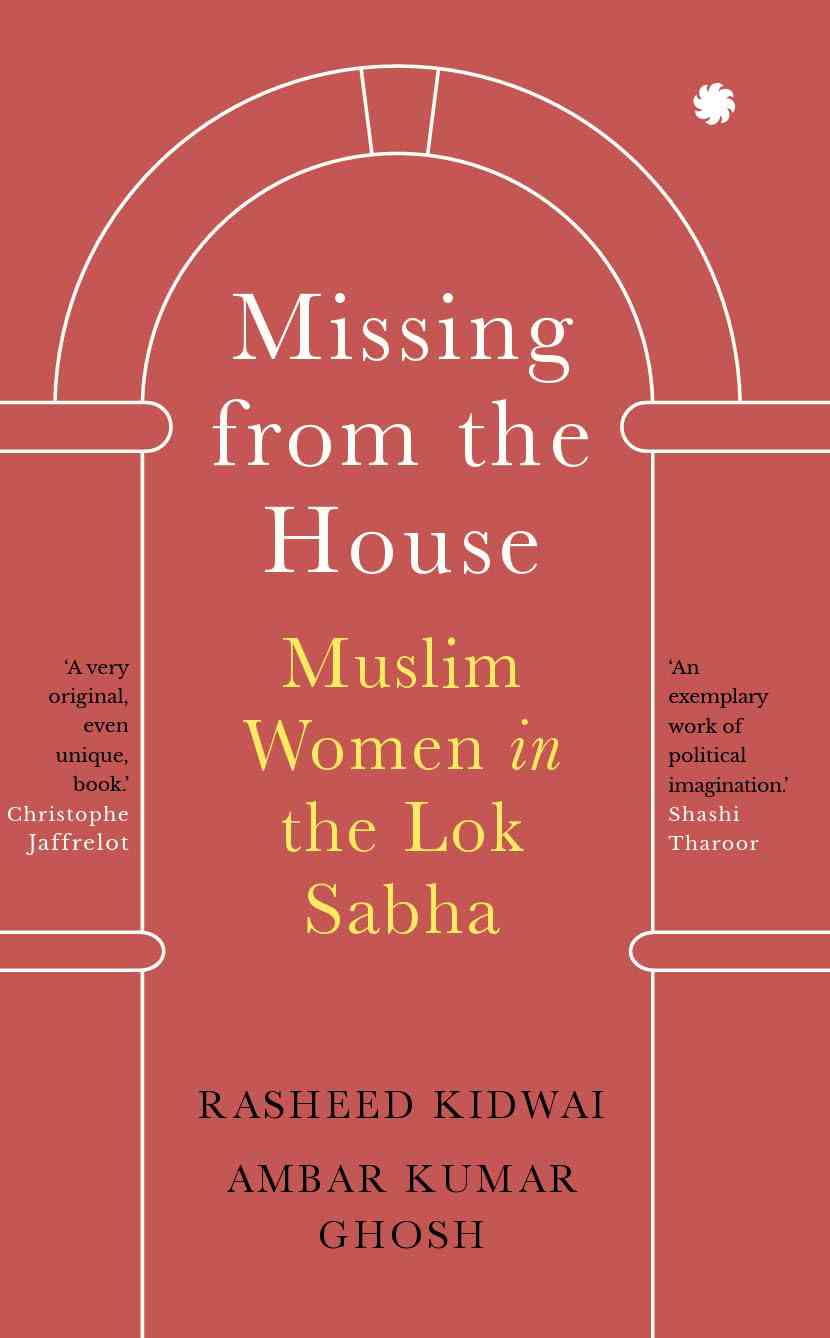
Excerpted with permission from Missing from the House: Muslim Women in the Lok Sabha, Rasheed Kidwai and Ambar Kumar Ghosh, Juggernaut.
